Son La – Dien Bien – Tay Trang Border Gate Expressway: Opening the way for growth, investment, and Dien Bien’s aspiration for advancement in the New Era
After many years of anticipation, the Son La – Dien Bien – Tay Trang Border Gate Expressway is entering its initial implementation phase with the groundbreaking ceremony for Component Project 1 on compensation, support, and resettlement scheduled to take place in Muong Lan Commune, Dien Bien Province on May 20, 2026. More than just a large-scale transportation project, the expressway is expected to become a strategic driving force opening up new development opportunities for Dien Bien and the Northwest region.
The Investment Project for the Son La – Dien Bien – Tay Trang Border Gate Expressway section (Phase 1) has been identified as a strategic transport infrastructure project of special significance to Dien Bien Province and the Northwest region. According to the report of the Dien Bien Provincial Transport Works Project Management Board, the expressway will have a total length of approximately 48.3 kilometers, with the starting point connecting to the expressway section through Son La Province and the endpoint located in Muong Thanh Ward, Dien Bien Province.
The project will be developed as a fully completed four-lane expressway with a 22-meter-wide roadbed and a design speed of 80 km/h, including five interchanges, synchronized bridge and tunnel systems, and intelligent transportation infrastructure. The total estimated investment for the entire project is VND 23.252 trillion, of which: Component Project 1 on compensation, support, and resettlement has an investment of VND 1.424 trillion funded by the local budget; Component Project 2 on construction of the main expressway route has an investment of VND 21.828 trillion funded by the central budget.
What makes the project remarkable is not only its large investment scale but also the long-term development vision the expressway offers. It is considered a project embodying the “historic aspiration of the Northwest people,” contributing to the completion of the national expressway network while creating breakthroughs in regional connectivity among Dien Bien, Son La, Hoa Binh, and Hanoi
For many years, transportation has been regarded as the biggest bottleneck hindering Dien Bien’s socio-economic development. The mountainous terrain and dependence on winding national highways such as National Highway 6 and National Highway 279 have resulted in high transportation costs, long travel times, and limited market connectivity. Therefore, the formation of this new expressway is expected to gradually break the province’s long-standing transportation isolation and create a strategic corridor connecting the Northwest region with the lowlands and major economic centers.
Beyond transportation benefits, the project is expected to unlock development potential across multiple sectors. According to Dien Bien Province’s orientation, the expressway will help attract investment in processing industries, logistics, trade, services, and tourism while also facilitating the formation of new urban areas and service zones along the route.
For localities located within the project area, expectations for change are already becoming increasingly tangible. In Muong Lan Commune, the location selected for the groundbreaking ceremony, local Party committees and authorities believe the expressway will create strong momentum for agricultural development, tourism, and local commerce. Agricultural products such as coffee, fruit crops, and OCOP products will gain easier access to larger markets thanks to reduced transportation time and costs.
At the same time, eco-tourism and experiential tourism potential in Muong Lan, including Hua Chan Waterfall, Nam Hoa Stream, the cat-ear stone field in Pha Hun Village, and the traditional cultural values of Thai, Mong, and Kho Mu ethnic communities, are also expected to be “awakened” as transportation infrastructure improves.
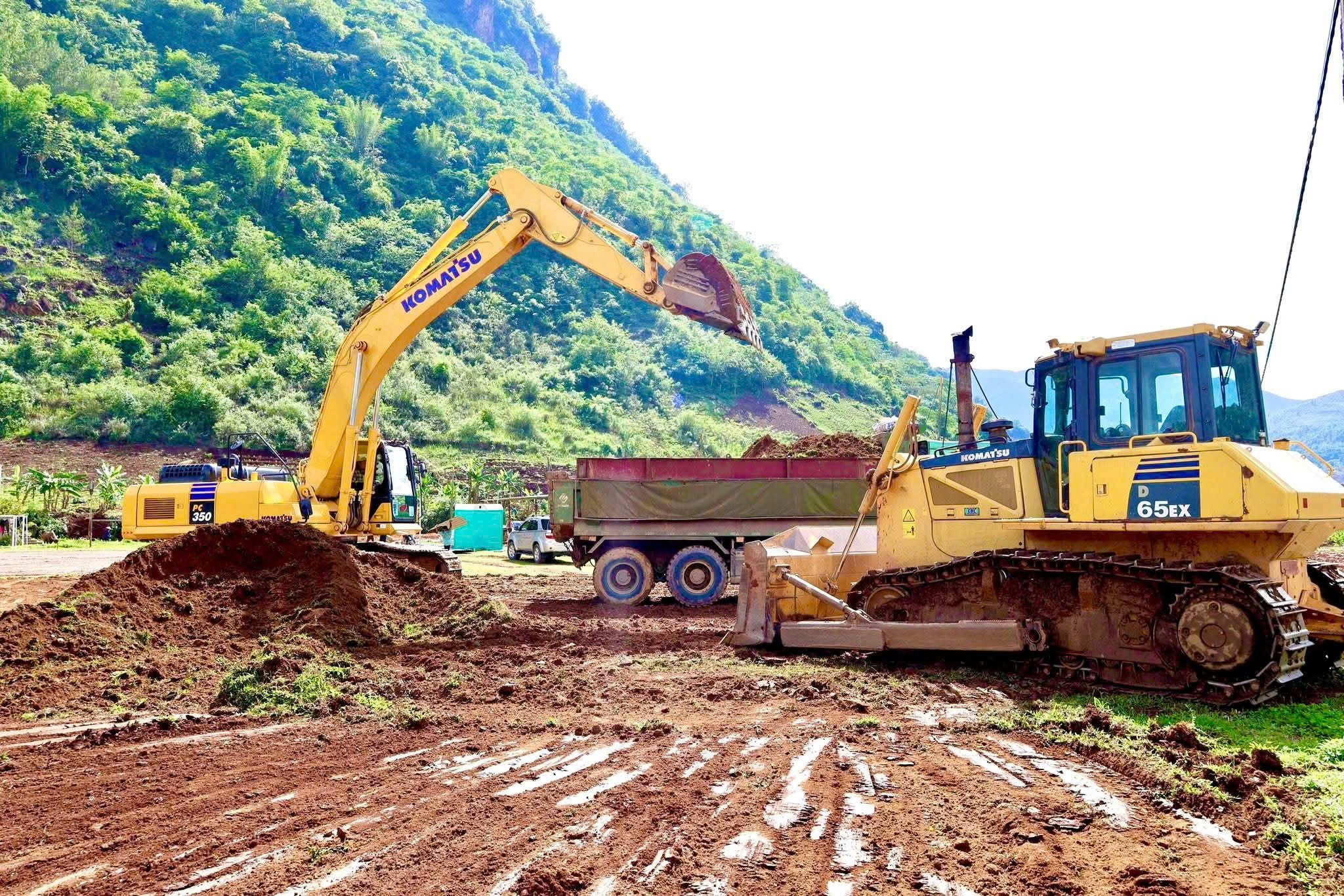
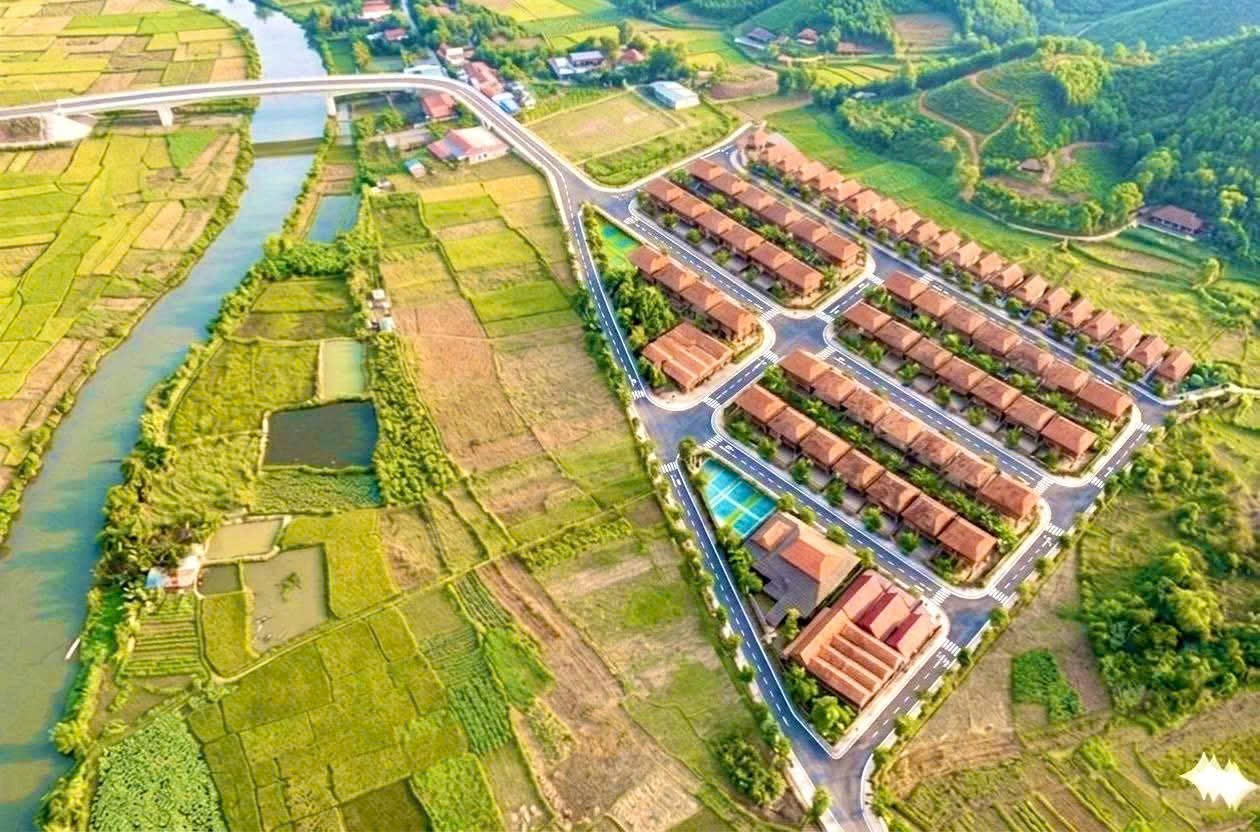
Notably, Dien Bien Province has adopted a unique implementation approach. Instead of immediately focusing on construction of the main route, the province decided to separate Component Project 1 on compensation, support, and resettlement for early implementation. Prioritizing resettlement first aims to ensure the principle that “resettlement must go one step ahead,” creating cleared land and stabilizing people’s livelihoods before construction of the main route begins.
According to the plan, Component Project 1 will recover approximately 766.29 hectares of land, arrange resettlement for around 276 households, and construct six resettlement sites along the route. This phase is considered decisive for ensuring project progress and achieving social consensus for the entire project.
At a time when many major infrastructure projects face difficulties due to site clearance issues, Dien Bien’s proactive implementation of resettlement first demonstrates the province’s strong political determination to accelerate this strategic project. More importantly, this approach reflects a development orientation that places people at the center, aiming to ensure that residents’ new homes are equal to or better than their previous living conditions.
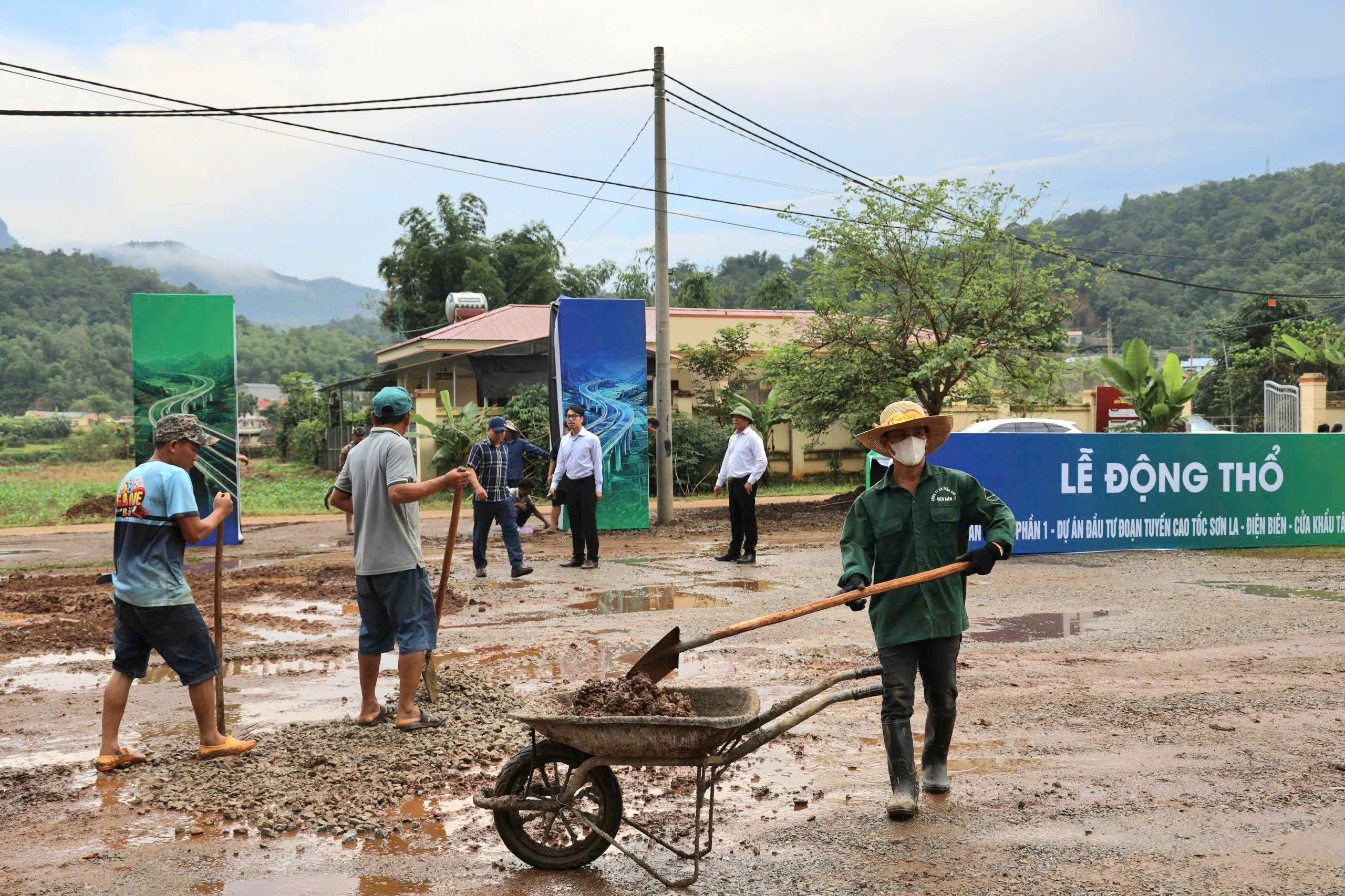
If implemented according to schedule during the 2026 - 2030 period, the Son La – Dien Bien – Tay Trang Border Gate Expressway will not only shorten geographical distances but also create opportunities to redefine Dien Bien’s role on the economic map of the Northwest region.
The groundbreaking ceremony for Component Project 1 on May 20 is therefore not only the starting point of a major transportation project but also a message of development aspiration, proactive spirit, and Dien Bien’s determination to achieve breakthroughs in the new era./