Provincial People's Committee Reviews Two Key Master Planning Projects at June Meeting
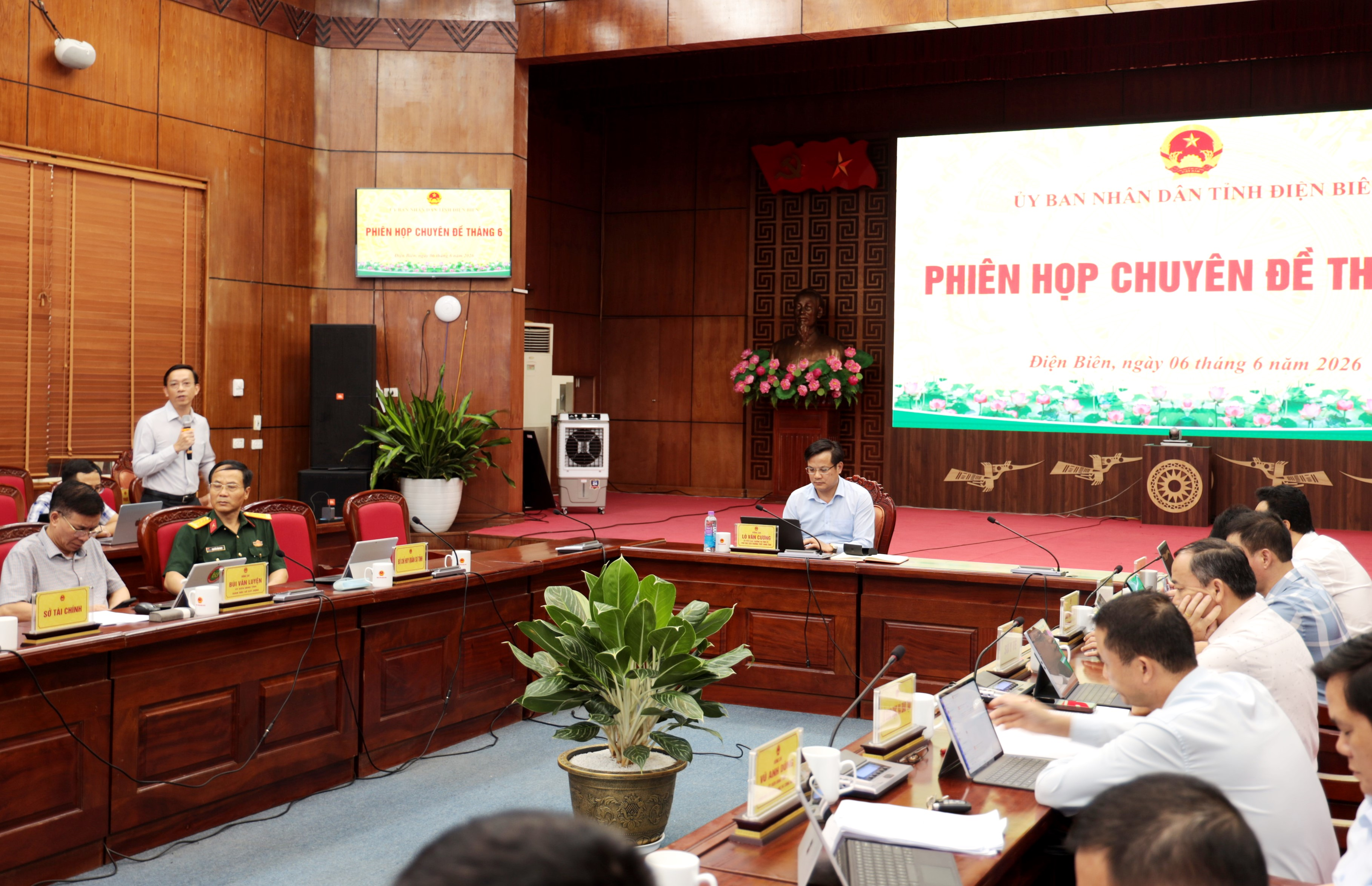
On the afternoon of June 6, Comrade Lo Van Cuong, Member of the Standing Board of the Provincial Party Committee and Permanent Vice Chairman of the Provincial People's Committee, chaired the Provincial People's Committee's first regular meeting for June 2026 to review and provide comments on two major master planning projects: the General Master Plan for the Dien Bien Phu - Muong Thanh Inter - Ward Urban Area to 2050 and the General Master Plan for Pu Nhi Commune to 2045.
The meeting was attended by representatives of the Standing Committee of the Provincial People's Committee's Party Committee, members of the Provincial People's Committee, and leaders of relevant departments, agencies and local authorities.

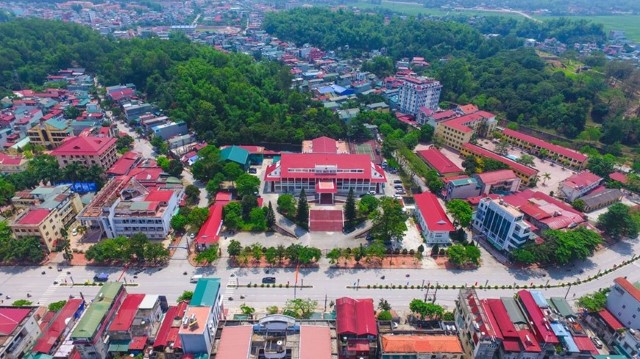
According to the Department of Construction, the General Master Plan for the Dien Bien Phu - Muong Thanh Inter - Ward Urban Area covers the entire administrative boundaries of Dien Bien Phu Ward and Muong Thanh Ward, with a total area of approximately 84.55 square kilometres, and a planning horizon extending to 2050.
The plan aims to develop the Dien Bien Phu - Muong Thanh urban area into a Class-II city, serving as the province's political, administrative, economic and cultural center while evolving into a tourism and service hub that reflects the unique identity of Northwest Vietnam. It also seeks to preserve the area's historical, cultural and natural heritage while creating new momentum for socio - economic development and investment attraction.
The proposed urban structure follows the development model of "One Core - Two Development Corridors - One Ecological Belt." The historic urban core will serve as the city's development anchor, complemented by four functional zones comprising the historic center, new urban areas, tourism and service districts, industrial areas, and ecological conservation zones.
The plan projects an urban population of approximately 100,000 by 2035 and 150,000 by 2050, with annual tourist arrivals expected to reach between 1.5 and 2 million.
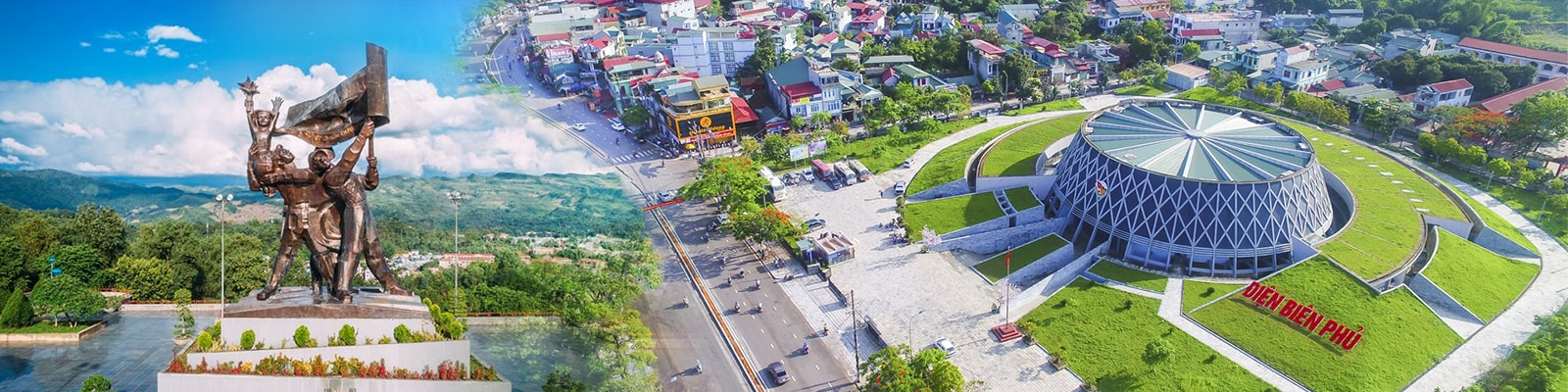
It also proposes the synchronized development of transport infrastructure, public utilities and social infrastructure; expansion of urban, tourism and service areas; development of new urban districts, administrative centers and industrial zones; while placing particular emphasis on preserving the outstanding historical values of the Dien Bien Phu Battlefield Special National Relic Site and the iconic Muong Thanh Valley landscape.
Regarding the General Master Plan for Pu Nhi Commune to 2045, the planning area covers the commune's entire administrative boundary, totaling approximately 18,019 hectares, with a current population of around 10,102.
The plan envisions Pu Nhi as a green and sustainable community that preserves its ethnic cultural identity while capitalizing on its natural landscapes and strategic location connecting the Muong Thanh Valley with regional transport corridors.
The commune is planned to serve as an important ecological buffer zone while promoting peri-urban economic development, eco - tourism, community-based tourism, high-tech agriculture and forestry, and trade and services.
The commune will be organized into four development sub-regions. The northwestern sub-region will function as the administrative, political, service and logistics center. The central sub-region will focus on cultural, historical and eco-tourism linked with agriculture and forestry. The southwestern sub-region will prioritize agriculture, forestry, concentrated livestock farming and resort tourism, while the northeastern sub - region will promote indigenous tourism, forest conservation and ecological agriculture.
The master plan also outlines the integrated development of transport infrastructure, electricity, water supply, telecommunications, drainage and waste treatment systems, together with administrative, educational, healthcare, commercial and tourism facilities.
At the same time, it encourages the expansion of commercial agriculture by developing high-value crops such as coffee, macadamia, passion fruit and ginseng, alongside increasing forest coverage and strengthening environmental protection.
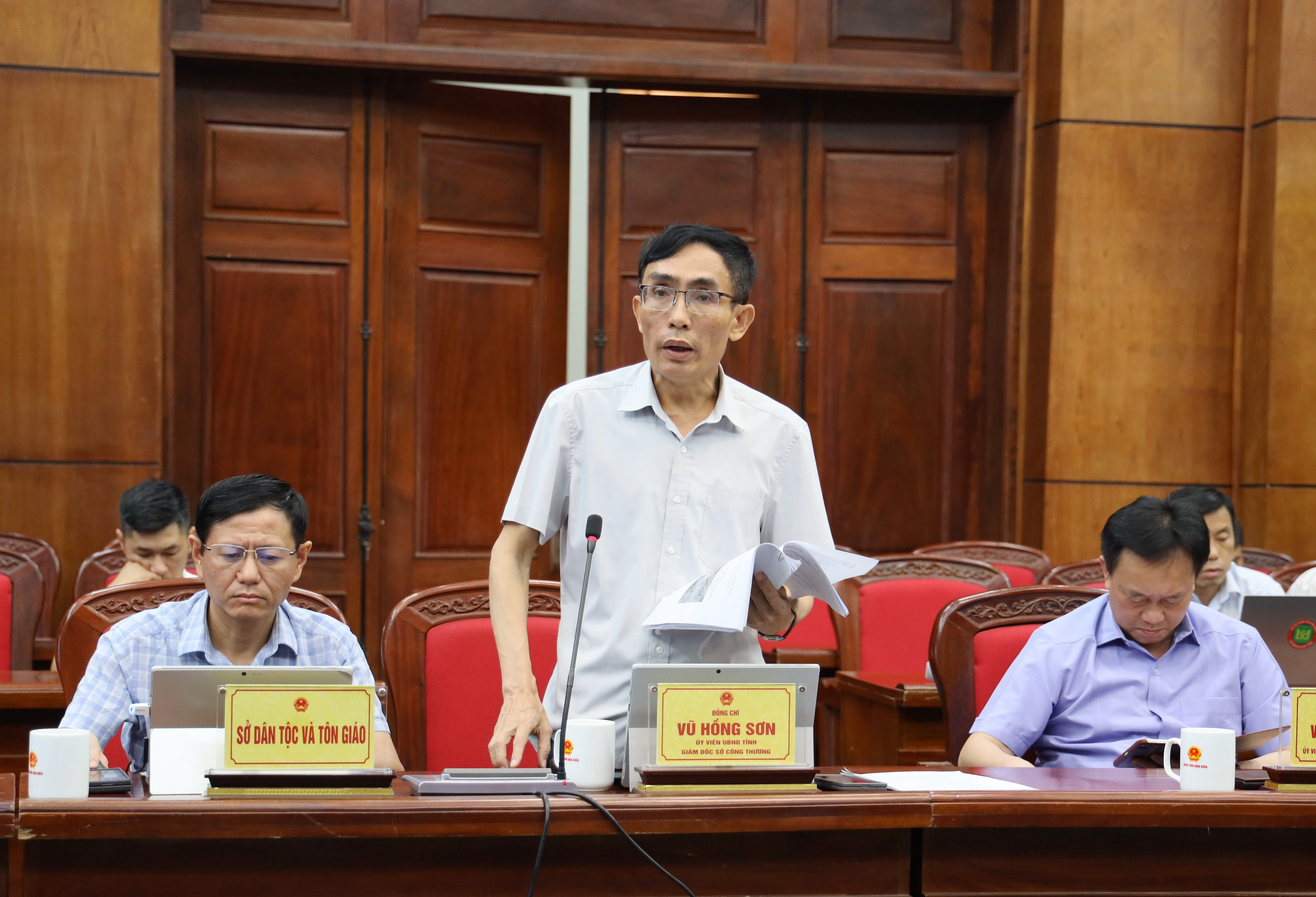
During the meeting, representatives of provincial departments, local authorities and the consulting unit provided comments aimed at improving the plans' consistency, feasibility and alignment with the province's long - term development strategy.
Discussions focused on refining functional zoning, promoting multi - layer spatial planning, updating the inventory of historical and cultural heritage sites, planning regional industrial and logistics hubs, integrating energy development strategies, clarifying smart city development concepts, and enhancing technical and social infrastructure to maximize local development potential while supporting sustainable socio - economic growth.
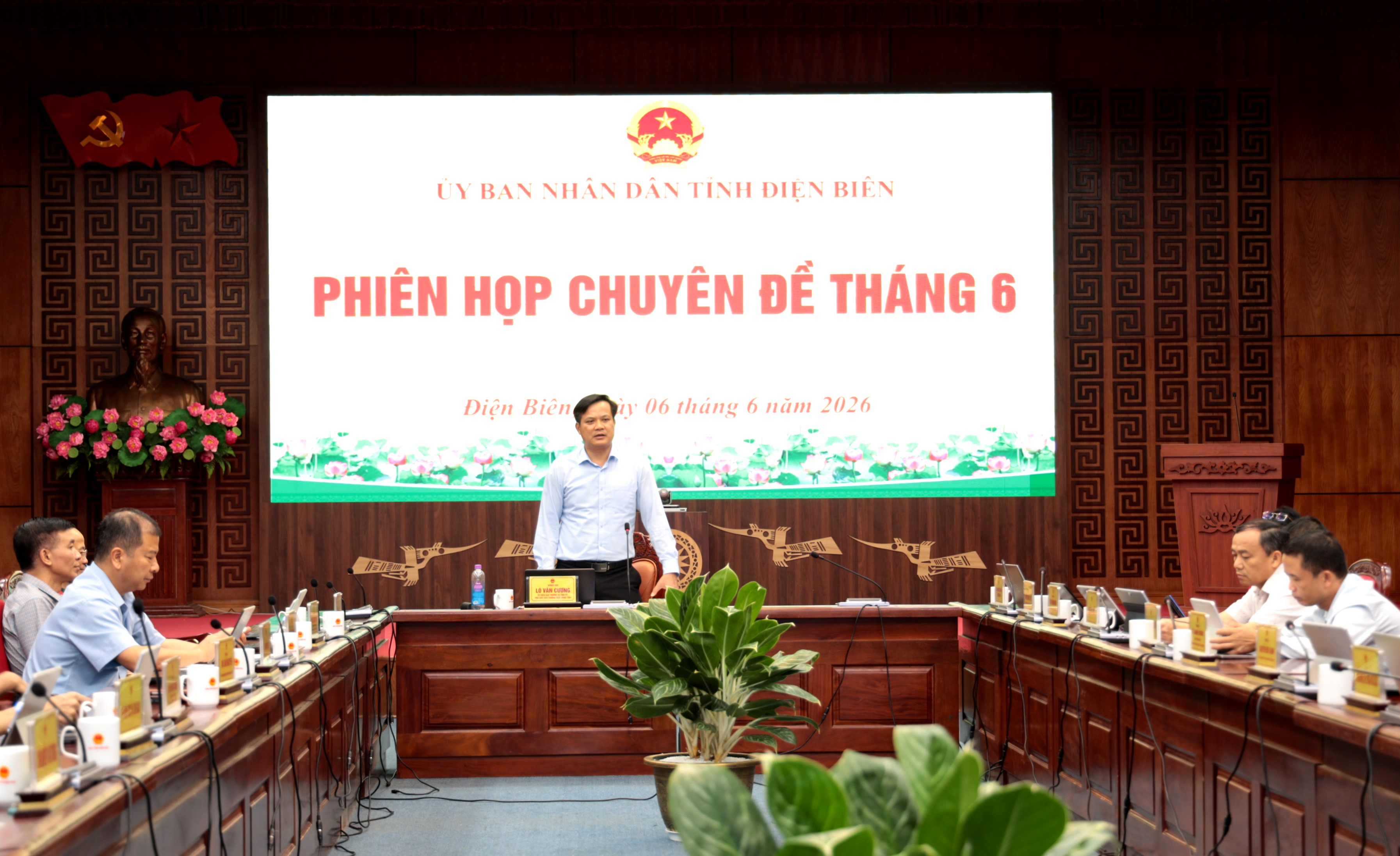
Concluding the meeting, Comrade Lo Van Cuong requested the consulting unit to fully incorporate all comments and continue refining the planning dossiers to ensure consistency, scientific rigor and practical feasibility.
He also instructed local authorities to coordinate in reviewing projects and infrastructure within their jurisdictions, while assigning the Office of the Provincial People's Committee to consolidate comments, finalize the report for consultation with members of the Provincial People's Committee, and submit it to the Provincial People's Committee's Party Committee for further consideration before seeking guidance from the Standing Board of the Provincial Party Committee./.