Prime Minister Le Minh Hung Holds Working Session with the Standing Board of the Dien Bien Provincial Party Committee
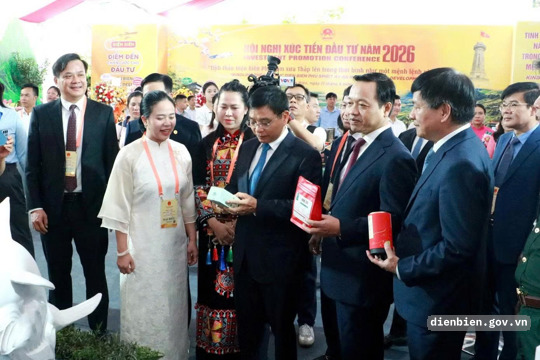
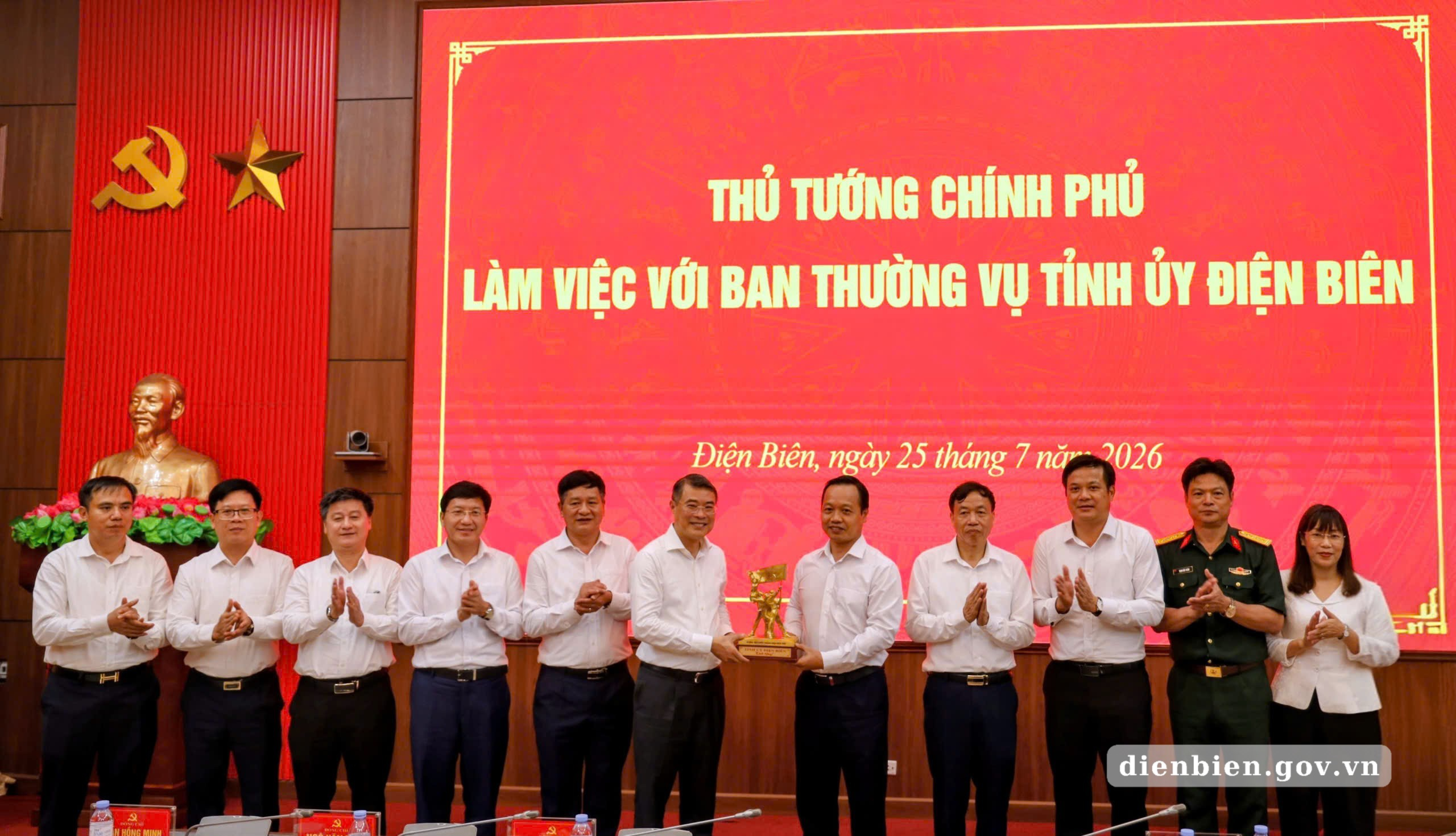
Continuing his working visit to Dien Bien Province, on the morning of July 25, at the headquarters of the Provincial Party Committee, Prime Minister Le Minh Hung and the central government delegation held a working session with the Standing Board of the Dien Bien Provincial Party Committee on the implementation of socio-economic development tasks, national defence, security and foreign affairs in the first six months of 2026, as well as key tasks and solutions for the coming period.
According to a report by the Standing Board of the Dien Bien Provincial Party Committee, the province's Gross Regional Domestic Product (GRDP) grew by 8.67% in the first six months of 2026 compared to the same period last year, higher than the national average of 8.18%, ranking 17th among the country's 34 provinces and centrally governed cities. The economic structure continued to shift in a positive direction, with the service sector remaining the main growth driver, accounting for 62.35% of the economy. Key sectors maintained strong growth momentum. The Index of Industrial Production (IIP) increased by 16.03% year-on-year; total retail sales of goods and consumer service revenue exceeded VND 16.6 trillion, up 14.86%; and total import-export turnover reached nearly USD 83 million, an increase of 26.68%. Tourism generated more than VND 1.7 trillion in revenue and welcomed nearly one million visitors, up 20%. As of July 9, 2026, public investment disbursement had reached 54.3% of the 2026 plan, ranking first nationwide. The province also accelerated the approval and implementation of adjustments to the Provincial Planning for the 2021–2030 period with a vision to 2050, approved on February 28, 2026.

At the same time, Dien Bien has focused on accelerating major projects, including Phase I of the Son La – Dien Bien – Tay Trang Border Gate Expressway; striving to complete nine inter-level ethnic boarding schools in border communes before August 30, 2026; the "Lighting Up Dien Bien" rural electrification project; and non-budget investment projects undertaken by strategic investors in the province. Meanwhile, the two-tier local government model has been operating in a stable manner, and officials have been promptly reviewed and assigned following the administrative restructuring. Continued attention has been paid to culture, social affairs, education and training, healthcare, sustainable poverty reduction and employment. The province has vigorously implemented the 500-Day Campaign on the search, recovery and identification of fallen soldiers' remains. National defence and security have been maintained, while social order and safety have remained stable. Ethnic and religious affairs have continued to receive due attention, and external relations, economic cooperation and cultural exchanges with neighbouring border localities have been further strengthened.

At the meeting, the Standing Board of the Dien Bien Provincial Party Committee proposed that the Government, the Prime Minister and central ministries and agencies give early approval to the update, adjustment and supplementation of the National Power Development Plan VIII; invest synchronously in transmission infrastructure, substations and 500kV and 220kV transmission lines to enable the province to effectively harness its energy development potential and promote socio-economic development. The province also proposed the early issuance of pilot mechanisms or investment attraction policies for solar and wind power projects integrated with Battery Energy Storage Systems (BESS). In addition, it requested the early promulgation of mechanisms for the effective management, exploitation, allocation and protection of water resources to ensure water security and proactively respond to droughts, floods, landslides and climate change.

The province also requested greater support to maximize the operational efficiency of Dien Bien Airport and proposed that the Government direct and encourage airlines to study the opening of new routes and maintain stable air services connecting Dien Bien with major cities nationwide, particularly in southern and central Viet Nam. In particular, the province proposed that the Government consider amending Decree No. 03/2017/ND-CP dated January 16, 2017 on casino business and Decree No. 06/2017/ND-CP dated January 24, 2017 on horse racing, greyhound racing and international football betting, with a view to easing certain criteria and conditions and giving priority to disadvantaged areas in permitting casinos for foreign visitors, in line with the province's orientation of developing tourism into a key economic sector.

In his concluding remarks, on behalf of the Government, Prime Minister Le Minh Hung acknowledged, highly appreciated and commended the determination, perseverance and significant initial achievements made by the Party Organization, authorities and people of Dien Bien Province in overcoming difficulties. He emphasized that these achievements provide an important foundation for the province to enter a new stage of development with greater aspirations, confidence and a stronger contribution to the country's overall development.

Regarding existing shortcomings, difficulties and challenges, the Prime Minister stressed that the province should candidly recognize that its economic scale remains modest, accounting for only 0.3% of the national GRDP and ranking 33rd among 34 provinces and centrally governed cities. Economic growth in the first six months of the year also fell short of the planned scenario, placing considerable pressure on the province to achieve growth of over 13.07% in the remaining six months in order to meet the annual target of 11.02%. This requires the province to define highly specific tasks for the second half of the year.
Regarding viewpoints, key tasks and solutions for the second half of 2026 and the coming period, the Prime Minister noted that achieving double-digit growth remains a major challenge for Dien Bien. Although the province possesses considerable potential, advantages and room for development and is one of the provinces not subject to administrative merger, it has yet to make a breakthrough due to persistent internal bottlenecks that have been identified but not thoroughly addressed. He therefore requested the province to adopt breakthrough thinking throughout all levels and sectors; identify priority areas; review and update growth scenarios for each sector, field and locality; assign clear responsibilities to departments, agencies, communes, wards and enterprises; clearly define leadership responsibilities; and conduct regular inspections and supervision.
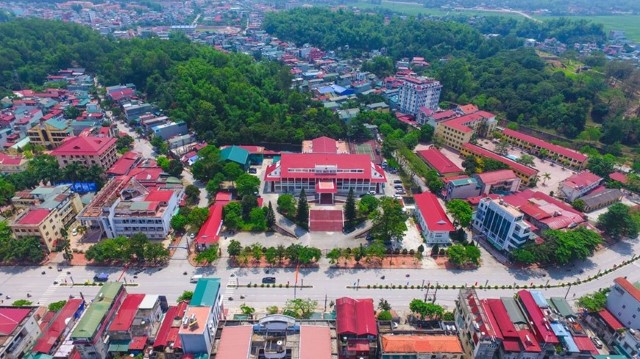
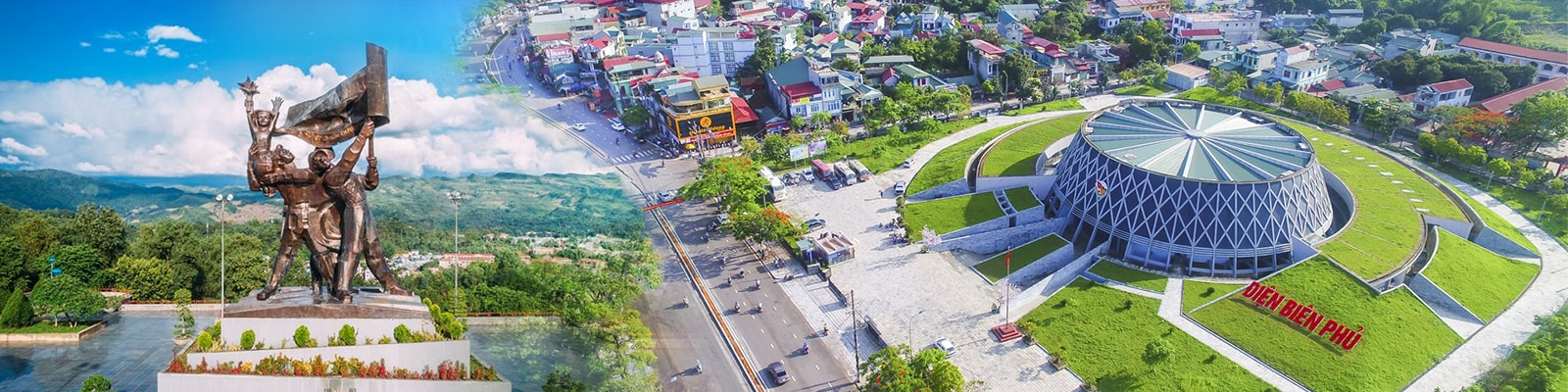
The Prime Minister emphasized prioritizing the development of the service sector as the principal growth driver. He called for the development of a modern border-gate economy at Tay Trang and A Pa Chai, transforming Dien Bien into a centre for border trade and logistics in the Northwest Region and a gateway for economic exchange with neighbouring countries and the wider region. He also urged the province to capitalize on the advantages of Dien Bien Airport, the Dien Bien Phu Special National Historical Relic Site, the province's historical legacy and distinctive heritage and landscapes such as Muong Thanh Field and the Hoa Ban Festival to develop experiential tourism and create distinctive tourism products and services. In addition, he called for stronger development of the processing and manufacturing industries, modern energy industries and proactive proposals to include additional wind and solar power projects in the revised National Power Development Plan. Agriculture should be developed toward concentrated commodity production, deep processing, high added value, sustainability, distinctive key products and transparent product traceability. The province should maintain its public investment disbursement momentum and strive to achieve a 100% disbursement rate by the end of 2026, prioritizing resources for key infrastructure projects with strong spillover effects. At the same time, it should strengthen the implementation, management and supervision of national target programmes to avoid duplication, fragmentation and waste, while preparing for the integration of the four existing national target programmes into a single programme.

The Prime Minister also requested the effective implementation of the adjusted Provincial Planning in line with the National Master Plan, regional planning and rural planning, while concretizing the model of "four growth poles", with the Dien Bien Phu – Muong Thanh – Muong Phang growth pole serving as the nucleus driving the province's development. Priority should be given to investing in connectivity infrastructure projects, maximizing the advantages of Dien Bien Airport, forming strategic development corridors and ensuring that "Dien Bien is no longer the end point, but becomes a regional economic gateway."
The Prime Minister further urged the province to continue effectively implementing social security, healthcare, education, cultural development and sustainable poverty reduction policies, especially for ethnic minority communities and border areas, while narrowing disparities in education and healthcare quality between regions. He requested that the highest priority be given to completing the first phase of nine inter-level boarding schools, which commenced construction in 2025, before August 30, 2026, for simultaneous inauguration on September 5, 2026. He also emphasized environmental protection, biodiversity conservation, sustainable forest development, strengthened disaster prevention and response during the coming rainy season, effective operation of the two-tier local government model, enhanced capacity building for commune - level officials, particularly in border and extremely disadvantaged communes, and a comprehensive review of grassroots officials to ensure appropriate personnel arrangements.
Regarding the province's proposals and recommendations, the Prime Minister expressed his general agreement in principle and directly responded to a number of specific issues. He assigned ministries, agencies and local authorities to study the proposals, coordinate closely in addressing them, proactively carry out tasks within their authority, and promptly report and seek decisions from competent authorities on matters beyond their jurisdiction./.