Dien Bien Establishes Muong Nhe National Park
Dien Bien Province has decided to establish Muong Nhe National Park, retaining the area, existing conditions and organizational structure of Muong Nhe Nature Reserve. Covering more than 46,700 hectares, the park is expected to become a key site for biodiversity conservation, forest ecosystem protection and ecotourism development in Vietnam’s far west.
Upgrading the Nature Reserve to a National Park
Under Decision No. 2559/QD-UBND, signed by Chairman of the Dien Bien Provincial People’s Committee Le Van Luong, Muong Nhe National Park covers 46,730.4 hectares across Sin Thau, Muong Nhe and Nam Ke communes, encompassing 27 forest management compartments.
The park borders China to the north, Laos to the west and Quang Lam Commune to the southeast. Its eastern boundary follows National Highway 4H, adjoining production forests managed by communities in the buffer zone.
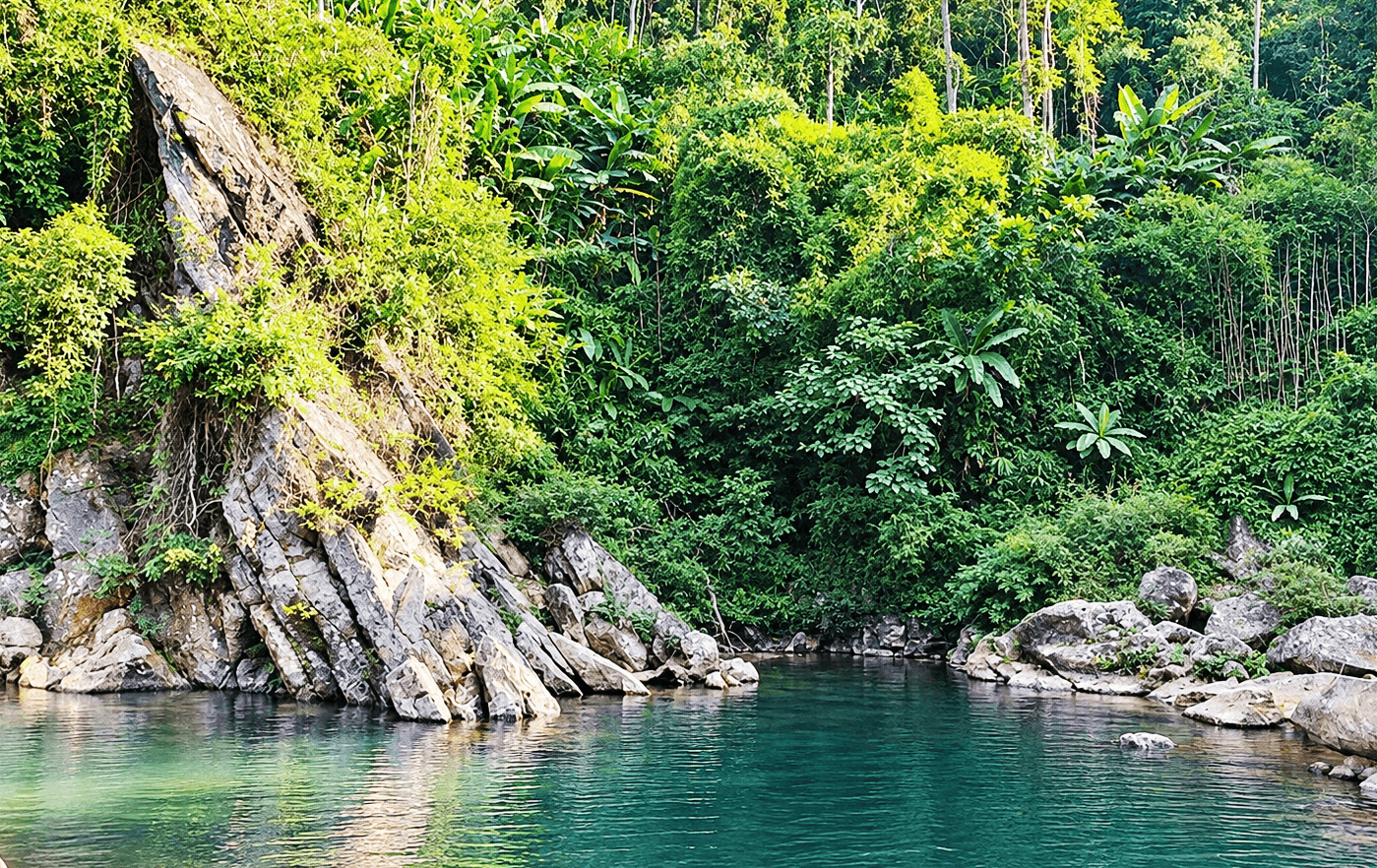
A view of Muong Nhe National Park. Photo: Muong Nhe National Park Management Board.
Under the plan, Muong Nhe National Park is divided into three functional zones. The strictly protected zone covers 22,130.18 hectares and focuses on preserving natural ecosystems intact. The ecological restoration zone spans 21,660.39 hectares and is designated for forest protection and restoration. The service and administrative zone covers 2,939.83 hectares, supporting management, scientific research and the development of appropriate ecotourism, resort and recreational services.
The park’s buffer zone covers approximately 45,617.84 hectares and comprises 25 villages across Sin Thau, Muong Nhe and Nam Ke communes. This area plays an important role in coordinating forest protection and limiting the impact of production activities and daily life on natural ecosystems.
The establishment of Muong Nhe National Park marks a new stage in the management and conservation of this special-use forest. The area was designated a national protected forest in 1976. The Muong Nhe Nature Conservation Area Management Board was established in 2005, and the area was reclassified as a nature reserve in 2023.
Muong Nhe National Park is a public service unit under the Dien Bien Provincial Department of Agriculture and Environment. Its management board is established on the basis of the organizational structure, personnel, functions and duties of the Muong Nhe Nature Reserve Management Board to ensure streamlined and effective operations.
Conserving Biodiversity and Creating Forest-Based Livelihoods
Beyond its importance in protecting special-use forests, Muong Nhe is also considered an area of high biodiversity value. According to the management authority’s statistics, its ecosystems encompass various forest types, including evergreen broadleaf forests on non-limestone mountains, bamboo forests and mixed forests, as well as natural grasslands and river and stream systems.
Surveys have recorded 742 plant species, including rare and valuable species such as Fujian cypress, magnolia, agarwood and Asian mahogany. The area also supports diverse fauna, with 458 wildlife species. Of these, 97 appear on the IUCN Red List and in the Vietnam Red Data Book, including Asiatic black bears, grey langurs, pangolins, big-headed turtles and peafowl.
These ecosystems and valuable genetic resources call for stronger forest management and protection, biodiversity monitoring and measures to prevent damage to natural resources. Total funding needs for activities at Muong Nhe National Park during 2026–2030 are approximately VND 654.84 billion. Of this, revenue from payments for forest environmental services is projected at around VND 457.24 billion, with approximately VND 197.6 billion to be mobilized from other lawful sources.
Alongside forest protection, the management direction calls for greater application of science and technology to monitor natural resources, track changes in forest cover and conserve wild flora and fauna. Tools such as geographic information systems (GIS), camera traps and remote sensing data are envisaged to improve management and biodiversity monitoring.
Notably, ecotourism development linked to nature conservation and the cultural identities of local ethnic communities has been identified as a direction requiring attention. With 25 villages located in the buffer zone, creating stable livelihoods and encouraging residents to participate in forest protection are important to long-term conservation effectiveness.
The establishment of Muong Nhe National Park represents more than a change in its management structure. It also brings new requirements for mobilizing resources, strengthening conservation capacity and linking forest protection responsibilities with community benefits. This provides a foundation for protecting the distinctive ecosystems of Vietnam’s far west while making sustainable use of their natural values to support local socioeconomic development./.