Dien Bien sets goal of making breakthroughs in border-area infrastructure development
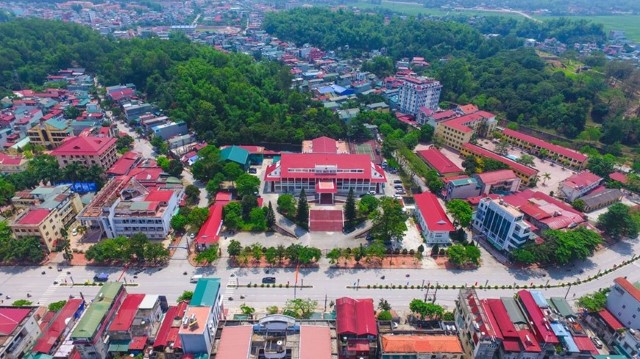
Although it remains a mountainous, border province facing numerous difficulties, Dien Bien has set a high determination to improve its infrastructure system, raise living standards, and gradually narrow the development gap with other regions nationwide.
Despite being a mountainous, border province facing many difficulties, Dien Bien remains determined to improve its infrastructure, raise the living standards of its people, and gradually narrow the development gap with other regions in the country.
Dien Bien is among the provinces with the highest poverty rate in the country, with over 80% of its population being ethnic minorities living in highland and border areas. Harsh natural conditions, divided terrain, uneven educational levels, and outdated production practices remain major obstacles to socio-economic development in the locality.
As of 2024, Dien Bien remains in the group of provinces with a low level of development. Its GRDP (current prices) reached VND 31,663.39 billion, accounting for only 0.27% of national GDP. The agriculture–forestry–fishery sector reached VND 4,829.39 billion, equivalent to 0.35% of the sector’s national share. In comparable prices, the province’s 2024 GRDP was only equal to 1/1.77 of Son La Province (VND 8,459 billion).
In recent years, however, the new-style rural development new rural areas program has been expanded across highland villages in Dien Bien. Many border villages have undergone significant improvements, with upgraded electricity, roads, schools, and healthcare facilities, contributing to higher living standards.
According to the provincial Department of Agriculture and Environment, in the first six months of 2025, many inter-village and inter-commune roads in districts such as Tua Chua, Muong Nhe and Muong Cha were upgraded; new or renovated electricity, clean water and school facilities were also completed. These are essential infrastructures directly affecting living conditions, especially in highland communes where prolonged rainy seasons often cause isolation.
Before the implementation of the two-tier local government model (effective from July 1, 2025), Dien Bien had 2 district-level units recognized as meeting new-style rural development standards, 2 model communes, 5 advanced communes, and 26 out of 115 communes meeting basic standards (22.6%). Some 267 villages met new-style or model rural standards.
Rural infrastructure has been significantly improved: 100% of communes have road access for automobiles to commune centers; more than 760 km of rural roads have been newly built or upgraded; most communes have irrigation works, and 93–95% of households use national grid electricity. Schools, healthcare stations, cultural houses and rural markets have been upgraded, improving living conditions and service quality. In 2024, average rural income reached VND 19.5 million per person per year, and over 62% of the labor force received vocational training.
Besides the efforts of local authorities and residents, State budget resources play a decisive role in helping remote communes accelerate infrastructure improvements and meet new rural criteria. Projects in transport, electricity, schools, health facilities and clean water have been funded according to an appropriate roadmap.
The Ministry of Finance plays a key coordinating role in allocating and supervising budget distribution, ensuring central funding is transparent, targeted and prioritizes border areas and ethnic minority communities. Budget management and disbursement have been tightened, improving public investment efficiency and providing a foundation for Dien Bien to synchronously implement essential infrastructure projects and promote socio-economic development.
Mr. Do Quang Minh, Head of the Sub-Department of Rural Development and Cooperative Economy of Dien Bien Province, noted that each completed new rural areas criterion brings practical improvements to daily life, from transport, healthcare and education to the environment. For highland areas like Dien Bien, maintaining and improving achieved criteria is even more challenging than fulfilling new ones. The province is focusing on resolving obstacles in communes that have nearly met standards and mobilizing social resources for remaining items.
A representative of the Department of Agriculture and Environment said the greatest difficulty is that many communes have nearly fulfilled criteria but still lack key indicators such as income, infrastructure and environment. Highland communes face substantial obstacles in transport and access to investment resources.
The year 2025 marks a transitional period between two phases of the new rural areas program (2021–2025), with increased workload and higher requirements. Meanwhile, investment resources remain limited, while demand for transport, irrigation, school and healthcare infrastructure in communes remains large. Harsh terrain and climate, especially in highland districts like Muong Nhe, Nam Po and Tua Chua, often cause prolonged isolation, slowing project progress.
Before these challenges, the provincial People’s Committee and relevant departments have directed districts to review and categorize communes with potential to meet standards for prioritized investment and completion of remaining criteria. The target by the end of 2025 is for four additional communes to meet new rural areas standards, raising the total to 30 communes (up by 4). The rate of qualified communes would reach 27% of the province’s total, and the average number of criteria achieved would reach 13 per commune, equaling 105.69% of the current level.
For the 2025–2030 period, Dien Bien aims to further strengthen new rural areas implementation with targets such as at least five communes meeting standards each year; having advanced and model communes; reducing the proportion of communes with fewer than 10 criteria to below 10%; increasing rural per capita income by 1.3–1.5 times; and ensuring over 95% of residents participate in health insurance.
At a working session with the Standing Board of Dien Bien Provincial Party Committee on December 5, Minister of Agriculture and Environment Tran Duc Thang stated that the National Assembly has approved the national target programs on new rural development, poverty reduction and ethnic minority development, which are particularly important for Dien Bien.
From April 1, 2026, the program will address issues such as clean water, infrastructure and cultural–social development. With this, Dien Bien will have favorable conditions, with little or no requirement for counterpart funding.
In addition, at least three other national target programs on healthcare, education and culture, with a combined budget of VND 340 trillion, will bring further benefits to Dien Bien./.
Source: Finance & Business Magazine