Dien Bien in the 2025–2030 period: Attracting private investment and PPPs for an infrastructure breakthrough
Public investment continues to serve as important “seed capital”, but to realize GRDP growth targets, restructure the economy and create infrastructure breakthroughs, Dien Bien must expand efforts to attract private investment, especially projects implemented under public–private partnership (PPP) models in the 2025–2030 period.
In the context in which the 15th Provincial Party Congress of Dien Bien set the objective of developing the province toward a green, smart and sustainable economy by 2030, becoming a tourism hub of the region and moving into the group of relatively developed localities in the Northern midland and mountainous region, the issue of mobilizing development resources has become more urgent than ever.
Public investment remains an important “catalyst”, yet to turn GRDP growth targets into reality, restructure the economy and achieve infrastructure breakthroughs, Dien Bien has no choice but to open wider doors to attract private capital, particularly through PPP projects during 2025–2030.
From the 15th Congress Resolution to the need for strong mobilization of social capital
The 15th Provincial Party Congress of Dien Bien took place at a time when the province had gained new development space from the provincial master plan for the 2021–2030 period with a vision to 2050 approved by the Prime Minister, while at the same time facing significant challenges: a modest economic scale, underdeveloped and weak infrastructure, a high poverty rate among ethnic minority communities, and limited endogenous capacity of local enterprises.
The Resolution of the 15th Congress affirmed Dien Bien’s development message as “green – smart – sustainable”, associated with economic restructuring toward reducing the share of agriculture and forestry, while rapidly increasing the proportions of industry–construction and services, especially tourism, logistics and border trade. The province set targets for high GRDP growth during the 2025–2030 period, along with substantial improvements in GRDP per capita, labor productivity and local budget revenues.
To achieve these objectives, the Resolution identified three strategic breakthroughs: institutional and policy mechanisms and administrative reform; socio-economic infrastructure development with a focus on transport and urban systems; and the development of high-quality tourism and services based on distinctive historical and cultural values.
All three breakthroughs require very large volumes of capital, far beyond the capacity of the local budget. In the provincial master plan, Dien Bien has been oriented toward developing into a new growth pole in the Northwestern region, with a synchronized and modern infrastructure system including longitudinal and transversal transport axes, airports, expressways, power systems, urban infrastructure and tourism facilities. This can only be promoted if the province builds a well-structured strategy to attract strategic investors, both domestic and foreign, unleashing private capital flows and PPP forms.
In the Action Program following the 15th Congress, the Dien Bien Department of Industry and Trade was assigned a key role in driving GRDP growth, expanding economic space and leading the transformation of the growth model, with three pillars: industry; logistics and border trade; and renewable energy linked with Industry and Trade, tourism and OCOP programs. These are also sectors with strong potential to attract private investment and implement PPP projects throughout the 2025–2030 term.
Significant room for PPPs in transport, energy, urban development and tourism
First, transport infrastructure remains the largest bottleneck, yet also the area offering the greatest opportunities for PPP projects. Resolution No. 16-NQ/TU of the Provincial Party Committee on developing infrastructure systems associated with modern urban development for the 2021–2025 period, with orientations to 2030, places emphasis on strategic transport corridors connecting regions and border gates.
In practice, the Son La – Dien Bien expressway section is being studied for investment under a PPP model as initially planned, serving as a vital connection between Dien Bien and the national expressway network, shortening travel time and expanding space for investment and tourism attraction. If implemented effectively, this could become a “model project” for PPP application in provincial transport infrastructure, building investor confidence in project preparation capacity, risk sharing and revenue assurance by state agencies.
In addition to expressways, routes connecting key tourism areas, industrial zones and clusters, logistics centers and border gates can also be considered for PPP implementation under appropriate scales, from BOT and BT to O&M contracts, flexibly combining public and private capital. Structuring a project portfolio by phases for 2025–2030, clearly identifying revenue streams, transparent competitive bidding mechanisms and provincial support commitments will be the key to attracting investors.
Second, the energy sector and urban technical infrastructure present considerable space for private investors. In cooperation with six northern Lao provinces, Dien Bien is proposing investment in the 220 kV Nam Ou 5 – Dien Bien power transmission line during 2026–2030, laying the foundation for energy interconnection and regional power market development. At the same time, the potential for renewable energy development (small and medium hydropower, wind power suited to natural conditions), aligned with the province’s “green economy” orientation, can leverage PPP models to attract investors with experience, technology and financial capacity.
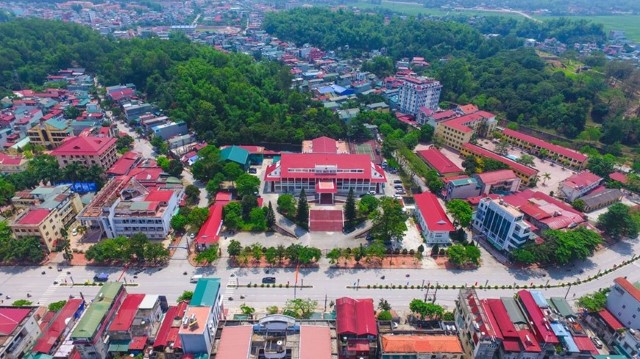
Urban power supply, water supply, drainage, solid waste treatment and smart lighting systems in Dien Bien Phu City, Muong Lay Town and other townships are being upgraded toward “green, smart and sustainable” models. These are fields where socialization and PPP models have proven effective in many localities nationwide, providing opportunities for Dien Bien to design medium- and small-scale projects suitable to the risk appetite of dynamic domestic private enterprises.
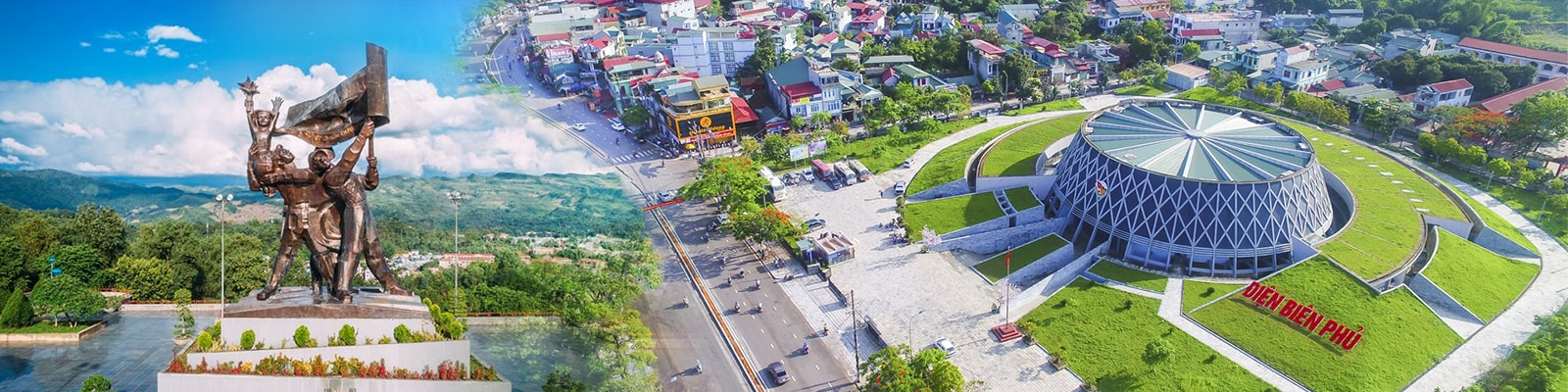
Third, high-quality tourism and services constitute both a strategic breakthrough and the most attractive destination for private capital. The province is positioning tourism as a spearhead economic sector based on the exceptional value of the Dien Bien Phu Victory, historical relic spaces, natural landscapes and the cultural heritage of ethnic communities. To convert potential into visitor flows and concrete revenues, Dien Bien needs to attract strategic investors into hotel systems, resorts, cultural–commercial–service complexes, reservoir-based eco-tourism, community tourism, and border tourism products linked with border gates and frontier markets.
Designing PPP projects in tourism infrastructure such as centralized parking facilities, green tourist bus routes, smart tourism information centers, pedestrian spaces and cultural parks will help reduce budget pressure while creating a favorable business environment for service enterprises. When linked with OCOP programs, border trade and logistics, these projects can form integrated value chains, spreading benefits to households, cooperatives and small enterprises, thereby contributing to sustainable tourism development goals.
Improving institutions and building investor confidence
To attract private capital and PPPs, Dien Bien needs not only an “attractive project list” but, more importantly, a transparent, stable investment environment with fair risk-sharing between the State and enterprises. This directly corresponds to the first strategic breakthrough identified by the 15th Congress Resolution: institutional reform, policy mechanisms and administrative reform.
First, the province must quickly translate the 15th Congress Resolution and the 2021–2030 provincial master plan into programs, schemes and priority investment project lists for the 2025–2030 period, clearly categorizing projects funded entirely by private capital, PPP projects and purely public investment projects. Publicizing planning information, land funds, sectoral development orientations and incentive and support policies in the digital environment will help investors reduce information access costs and shorten project preparation time.
Second, administrative procedure reform and capacity building of officials, especially in departments that work directly with enterprises such as Planning and Investment, Finance, Industry and Trade, Construction, Natural Resources and Environment, Tax Authorities and Customs, are essential for building trust. The “facilitative, service-oriented” government model emphasized by the Resolution must be translated into clear commitments on processing timelines, accountability and regular dialogue mechanisms with the business community.
Third, for PPP projects specifically, Dien Bien should focus on project preparation and contract structuring. An attractive PPP project depends not only on capital scale or contract duration, but critically on clarity in risk allocation (construction, demand, financial and legal risks), revenue-sharing mechanisms, guarantees and state support (such as revenue risk sharing, site clearance support, credit support and tax incentives). Flexibly applying the PPP legal framework to the practical context of a mountainous border province like Dien Bien requires close coordination between local authorities and central ministries and agencies.
Fourth, the province may consider establishing a “one-stop” mechanism for key and PPP projects, whereby the Department of Planning and Investment or a dedicated task force serves as the focal point supporting investors from project proposal and pre-feasibility study stages through negotiation and contract signing. At the same time, developing a monitoring and evaluation system for PPP implementation, publicly disclosing indicators on progress, quality and effectiveness on electronic portals, will enhance accountability and strengthen market confidence.
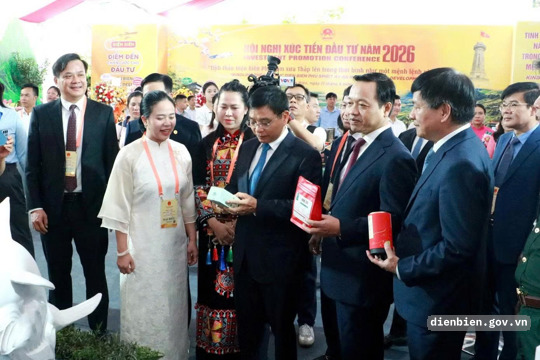
Finally, attracting private and PPP investment is not solely a matter for government action, but is closely linked to Dien Bien’s image in the eyes of investors and international partners. By proactively participating in regional cooperation forums and strengthening linkages with Northwestern provinces and the six northern Lao provinces in industry, trade, energy, tourism and logistics, messages portraying Dien Bien as “green – smart – sustainable”, open to investors, honoring commitments and accompanying enterprises over the long term can become an important form of “soft branding”, enabling the province to compete more effectively for increasingly selective investment flows.
During the 2025–2030 term, if Dien Bien can fully leverage all three pillars - open institutions, modern infrastructure and high-quality tourism and services, it will have a solid basis to transform PPP projects and private capital into key driving forces, helping translate the Resolution of the 15th Congress into reality through concrete works such as expressways, power lines, tourism areas and new urban developments, thereby realizing the goal of becoming a green, smart and sustainable province in the Northwestern region by 2030./.
Source: Industrial and Trade Magazine