Dien Bien focuses preserving culture of ethnic minority groups
Dien Bien has 19 ethnic groups living together. Each ethnic group has its own cultural identity, creating the richness and diversity of types of cultural heritage. In order to honor the good cultural values of the ethnic groups in the province, Dien Bien has been making efforts to preserve and develop ethnic cultures associated with socio-economic development.
People of Dien Bien district participate in the Hmong ethnic cultural festival.
Dien Bien is a land rich in cultural traditions, especially with many unique cultural features, many traditional festivals and historical and cultural relics. Therefore, the Department of Culture, Sports and Tourism has made efforts together with all levels, branches and localities to implement many activities to preserve and promote tangible and intangible cultural values, arouse the belief national pride, promote heritage values, create advantages for tourism development, contribute to socio-economic promotion, improve the people's material and spiritual life.
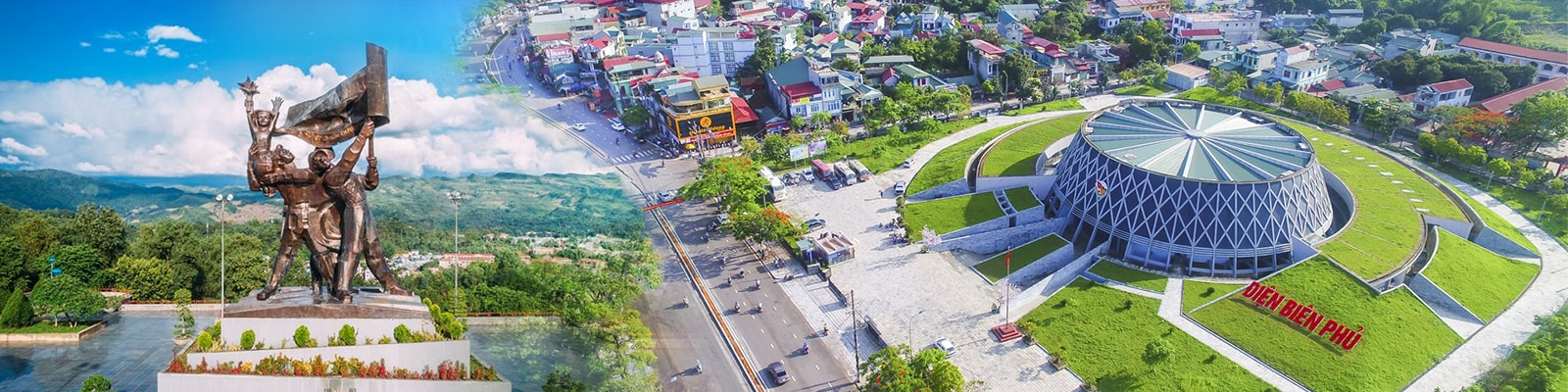
The whole province currently has 67 historical - cultural relics and scenic spots that have been inventoryed and 27 relics ranked by competent authorities. Our province has also zoning and planting 45 landmarks for the protection of historical and cultural relics at Ban Phu citadel, Noong Het commune (Dien Bien district); put up 191 signs and signposts for relics, cultural works and public works in the province. The work of restoration, preservation and embellishment of relics continues to be carried out, especially the Dien Bien Phu battlefield relic; implementing the project of building a martyr's temple at Dien Bien Phu battlefield. Management, protection and promotion of the value of relics in the province are carried out regularly, with coordination between departments, branches and localities. The display, exhibition, promotion and introduction of artifacts associated with local historical and cultural traditions are coordinated to implement in many provinces and cities in the country. The work of collecting and adding artifacts to the Museum and relics of interest is carried out, so that up to now, the total number of artifacts being kept and managed is up to 12,403 objects.
Mr. Nguyen Hoang Hiep, Deputy Director of the Department of Culture, Sports and Tourism, said: Along with the conservation of tangible cultural heritage, the preservation of intangible cultural heritage is interested and focused by the province. The province has coordinated with the Ministry of Culture, Sports and Tourism and a number of provinces to develop a heritage profile "Practices of Then by Tay, Nung and Thai ethnic groups in Vietnam"; "The art of Xoe Thai" proposed to inscribe on UNESCO's Representative List of the Intangible Cultural Heritage of Humanity; organize the international conference "The art of Xoe Thai". Up to now, the heritage "Practices of Then by Tay, Nung and Thai ethnic groups in Vietnam"; "The art of Xoe Thai" have been inscribed on UNESCO's Representative List of the Intangible Cultural Heritage of Humanity.
The inventory and scientific documentation of the intangible cultural heritage proposed to be included in the list of national intangible cultural heritage is of interest and implementation. The total inventory aims to identify the current status of intangible cultural heritage of 18 ethnic groups (in which the Mong people have conducted an inventory of the Green Hmong and Black Hmong branches). Actively prepare documents for intangible cultural heritage to propose the Ministry of Culture, Sports and Tourism to include in the list of national intangible cultural heritage. Up to now, the whole province has 12 intangible cultural heritages included in the list of national intangible cultural heritages. Like the art of Xoe Thai in Dien Bien province; Nao Pe Chau New Year of the Black H'mong people in Nam Pong village, Muong Dang commune (Muong Ang district); Kin Pang Then ceremony of the white Thai people in Na Nat village, Na Lay ward (Muong Lay town); Hoang Cong Chat Temple Festival at Ban Phu Citadel, Noong Het Commune (Dien Bien District); Tet of the Lao people in Na Sang 1 village, Nua Ngam commune (Dien Bien district); The art of creating patterns on traditional costumes of the Mong Hoa people in Cong Troi village, Sa Long commune (Muong Cha district); The village worshiping ceremony (Ga Ma Thu) of Ha Nhi people in Dien Bien province; The Flower New Year (Men loóng phạt ái) Cong people in Dien Bien province; Embroidery shoe making of the Hoa people (Xa Phang)…
Along with that, the work of collecting, preserving, translating and printing ancient written documents is concerned. Up to now, more than 200 ancient books (documents) of some ethnic groups (Thai, Dao, Lu) have been collected and preserved at the Provincial Museum. Conservation of ethnic minority languages and scripts (Thai and Hmong) is being implemented effectively when in the past 10 years (2010 - 2020), nearly 49,300 primary and secondary school students have learned Thai language; more than 57,100 primary and secondary school students learn Hmong. The education, propaganda, and introduction of typical cultural heritages of ethnic groups to students through mainstream programs, extra-curricular activities, and collective activities are concerned and implemented effectively. Especially, the implementation of the socio-economic development project in the ethnic minority areas of Dien Bien province, including the Cong and the Si La, has received attention and investment from all levels and sectors power. As a result, the material and spiritual life of the Cong and Si La ethnic groups in the province has basically been improved, the poverty rate has decreased; the majority of people have access to health, education and information services; specific cultural values are preserved. Mr. Giang A Dinh, Head of the Provincial Committee for Ethnic Minority Affairs, affirmed that the implementation of this project has made an important contribution to helping the Si La ethnic group receive support to restore traditional costumes, establish and maintain a cultural and cultural team; organize a new rice offering ceremony… The Cong ethnic group is supported to restore the production of traditional costumes and traditional musical instruments; restore and spread national culture; People are supported in the production of ethnic programs...
Efforts in preserving and creating conditions for the national cultural heritage to spread strongly in the community, especially the young people, have become more aware of cultural identity and cultural identity the connection between the past, present and future, from which people understand and have a better sense of protection./.
From: Dien Bien Phu Online