Community-Based Tourism – Dien Bien OCOP: A Value Chain from local communities to the market
Community-based tourism associated with OCOP is enabling Dien Bien to transform its advantages in villages, agricultural products and indigenous culture into a new economic value chain, from stilt houses to shelves of specialty goods. This is also how the province concretizes the objectives of the 15th Provincial Party Congress: developing a green and sustainable economy, with people as the central actors.
Dien Bien orients tourism closely to rural areas, OCOP and key agriculture, not stopping at short "check-in" points.
In the vision of the 15th Congress: Tourism inseparable from rural areas and cultural identity
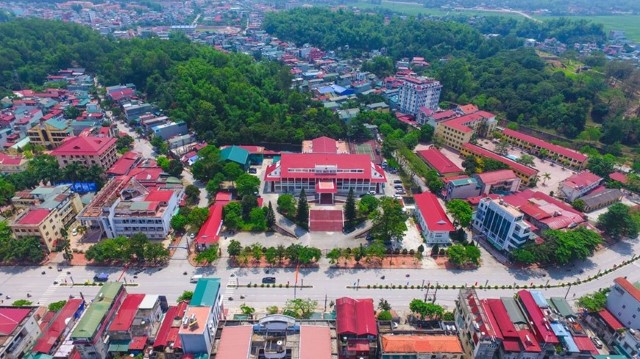
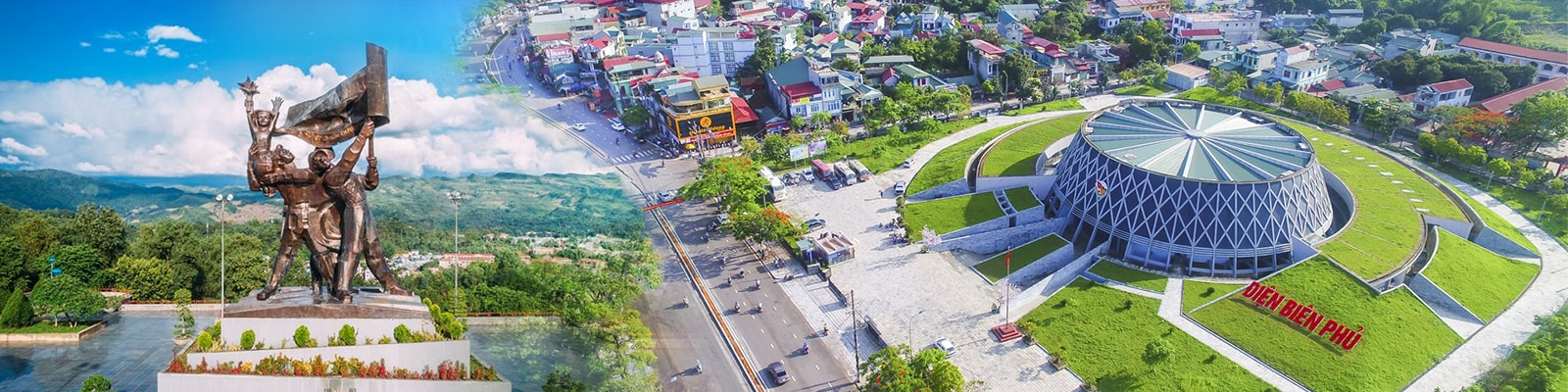
Dien Bien is a border mountainous province located far from major urban centers, yet it possesses unique advantages: the Dien Bien Phu battlefield relic complex; distinctive rivers, mountains and lakes; diverse forest ecosystems; and the cultural space of nearly twenty ethnic minority groups with rich traditions, festivals and cuisine. When the 15th Congress set the goal of making tourism an important economic sector, with orientations toward a green economy, digital economy, and improved growth quality, it implied that tourism must be more closely linked with rural areas, with OCOP, and with key agricultural sectors of the province, rather than remaining focused solely on short-term “check-in” attractions.
In this overall context, community-based tourism is not merely a type of service, but is regarded as an integrated “display space” of culture, agriculture, handicrafts and commerce. Each community-based village, if professionally developed, becomes both a destination and a “living showroom” for local products: Dien Bien rice, coffee, tea, dried meat, honey, brocade, medicinal herbs, and others. The 15th Congress emphasizes the requirement to preserve and promote cultural identity, associated with economic restructuring and sustainable poverty reduction; community-based tourism – OCOP is precisely where these requirements converge in a concrete model.
OCOP – Inputs enriching the community-based tourism experience
After years of implementation, the OCOP program in Dien Bien has produced a group of agricultural products, specialties and handicrafts with established brands, standards and origin stories. In many districts, OCOP products are no longer raw agricultural produce; they are processed, packaged, labeled, traceable and have begun to access modern retail channels and e-commerce platforms.
From a tourism perspective, OCOP is the “material” that enhances the visitor experience in villages. A homestay trip becomes far more appealing when the dinner is prepared from rice grown in the very fields that visitors toured in the afternoon; buffalo meat, stream fish or forest vegetables are introduced as products of local cooperatives; and coffee or tea is served from local OCOP brands. The experience continues when visitors bring home specialty packages, a brocade scarf or medicinal herbs, each with a specific story about its origins and the people behind it.
Conversely, community-based tourism helps OCOP move beyond the “safe zone” of fairs and display counters. When introduced in experiential contexts – in stilt houses, beside the kitchen fire, during festivals or on terraced fields – products appear more “alive” and memorable. Tourism practitioners who can tell stories and create connections will turn each OCOP product into a “piece” of the Dien Bien narrative, rather than simply an item for sale.
A value chain from local communities to the market
For a bundle of vegetables, a bag of rice or a brocade scarf from a village to stand firmly on supermarket shelves, e-commerce platforms or become popular tourist gifts, it requires a long value chain with many links: production organization, quality assurance, packaging design, branding, communication and distribution. Community-based tourism shortens the distance between producers and consumers, but the Industry and Trade sector, through its system of trade promotion, logistics, border trade management and distribution networks, plays the role of “conductor” connecting these links.
At the community level, tourism groups, agricultural cooperatives and women’s or youth collectives serve as the core forces, operating homestays while producing goods for tourists and markets. They determine the quality of hospitality, food, hygiene, landscapes and the authenticity of the visitor experience.
At the government level, particularly the Industry and Trade sector, the focus is on supporting the standardization of products in quality, packaging, labeling and traceability; while proactively connecting with distribution channels, e-commerce platforms, travel firms and hotel - restaurant systems to integrate products and destinations into modern supply chains. The sector also leads trade promotion programs, specialty weeks and regional fairs, in which tourism promotion is closely associated with OCOP product consumption. Based on this, Industry and Trade advises on mechanisms and policies on capital, land, infrastructure and digital transformation to support community-based tourism – OCOP models, enabling communities to access long-term development resources.
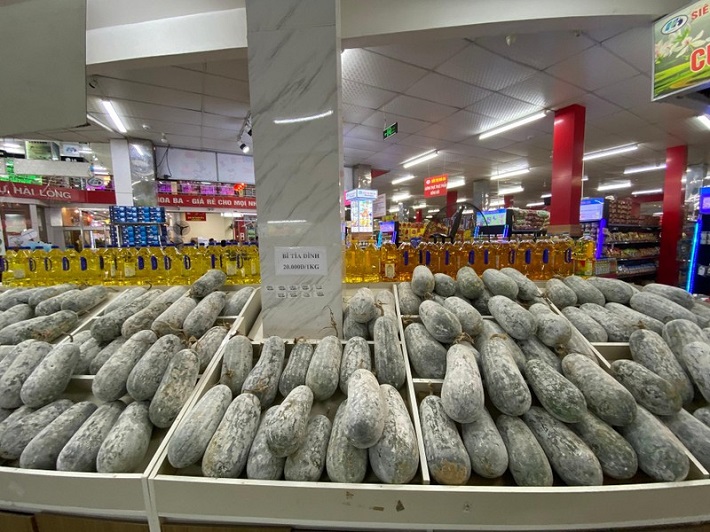
Dien Bien Industry and Trade Department supports standardization and connection of OCOP products into modern distribution chain.
At the enterprise level, tourism companies, distributors and retail systems that view Dien Bien as a long-term partner can participate by developing thematic tours linked with OCOP, placing orders with stable standards, and designing service packages that combine experiences, transport, accommodation and specialty shopping. Accordingly, each visitor group not only brings revenue from lodging and meals, but also generates a stable flow of goods from villages to urban areas.
When communities, government and enterprises all regard community-based tourism – OCOP as a value chain rather than isolated activities, the narrative “from village to market” truly materializes: local people gain additional income; regional products build brand value; visitors enjoy deeper experiences; and the province develops a “soft pillar” in its economic structure.
Proposed orientations to realize the goals toward 2030
To ensure that Dien Bien’s community-based tourism – OCOP becomes a vivid embodiment of the spirit of the 15th Congress, several directions may be considered:
First, develop themed clusters of community-based tourism – OCOP. Instead of fragmented development, the province may prioritize certain corridors and clusters such as those linked with Dien Bien rice and the Muong Thanh field landscape; highland coffee and tea; medicinal herbs, forest products and eco-tourism; or culture – history - border areas. Within each cluster, select several core community-based villages and concentrate resources for infrastructure, human resources, digital transformation and branding to create spillover effects.
Second, accelerate the digitalization of destinations and products. Each village, homestay and OCOP product should have QR codes, stories, images and videos in at least two languages; with information updated on digital maps, tourism platforms and official websites and fanpages of the province and related sectors. A “Digital Dien Bien” with virtual tours, online booking, cashless payments and transparent service reviews will help highland villages narrow the gap with the market.

Dien Bien aims to plan community tourism clusters - OCOP according to themes associated with typical products and indigenous spaces.
Third, invest in people as importantly as in infrastructure. Community tourism practitioners need continuous training, from hospitality, cooking, storytelling and environmental protection to photography, videography and using social media for promotion. Training sessions should be conducted hands-on in villages, with the participation of travel businesses and experts in marketing, design and e-commerce to shorten trial periods and help communities master new tools.
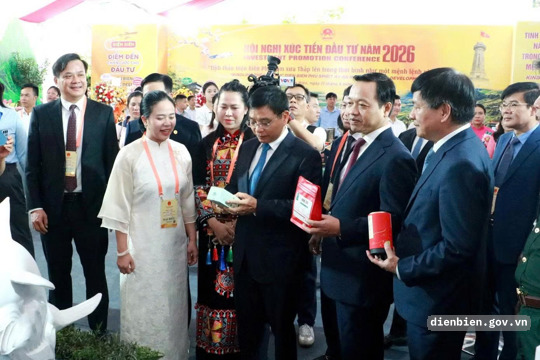
Fourth, create more promotional spaces for OCOP in events of the Industry and Trade sector. Besides thematic fairs, programs such as “Dien Bien Week in Hanoi/Ho Chi Minh City” or “Dien Bien Culture – Tourism – OCOP Space” at tourism festivals and investment promotion conferences can be organized. Each OCOP product should appear not just as a commodity but accompanied by village imagery, experiential videos and stories of producers, thereby inspiring immediate travel interest.
Finally, regard the development of community-based tourism – OCOP as part of the province’s strategy for transforming its growth model. As transport infrastructure, logistics, energy, border trade and digital transformation are invested according to the orientations of the 15th Congress, community tourism villages and OCOP products, if effectively integrated, will not remain on the sidelines but become highlights demonstrating how Dien Bien translates green and sustainable economic objectives into practical, approachable models.
From this perspective, the value chain “from village to market” is not merely a slogan or a tourism narrative, but a pathway enabling highland communities to truly become the main actors of development, while visitors, enterprises and the Industry and Trade sector accompany them in the long-term journey set forth by the 15th Provincial Party Congress./.
Source: Industrial and Trade Magazine