Bringing cultural heritage into tourism products
Identifying cultural heritage as a valuable resource, contributing to the creation of the local brand; The exploitation and promotion of traditional cultural heritage values into tourism products is becoming an effective and sustainable development direction. Dien Bien province has introduced many effective exploitation policies to contribute to the development of local tourism, bringing Dien Bien tourism brand to a large number of tourists from all over the world.
People in Ta Sin Thang village, Ta Sin Thang commune (Tua Chua district) introduce traditional embroidered shoes of the Xa Phang people to visitors.
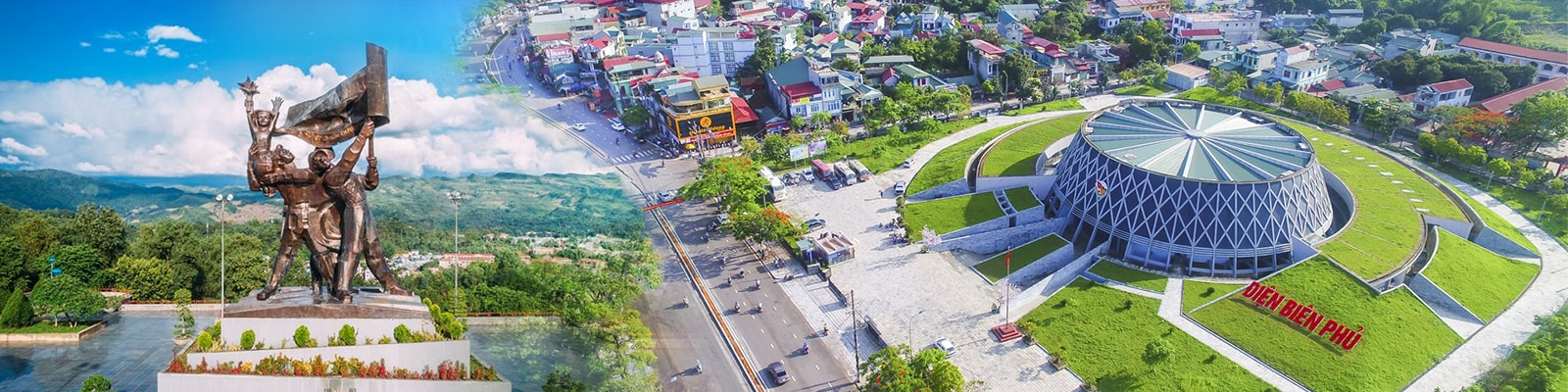
Dien Bien has 19 ethnic groups living with many unique cultural identities. Many of the province's intangible cultural heritages are recorded in the national list of intangible cultural heritage. Typical examples are: Xoe Thai art, the Tet holiday of the Mong people (Muong Dang commune, Muong Ang district), the ceremony of honoring the Dao people (Huoi So commune, Tua Chua district), shoe embroidery of the Xa Phang people, Kin pang then ceremony of the white Thai people (Muong Lay town), the water festival of the Lao people (Nua Ngam commune, Dien Bien district), the ceremony of worshiping the beast of the Ha Nhi people (Muong Nhe district)... Besides, The great values of the national historical relic complex, especially Dien Bien Phu Battlefield, the scenic spots and the cultural identity of ethnic minorities have been contributing to the formation of tourism products. mainstream, bearing the characteristics of the province.
In order for the "smokeless industry" to develop more and more, Dien Bien has had many policies to encourage investment capital attraction; strengthen inter-regional, domestic and foreign cooperation with the tourism development cooperation program in 8 provinces in the Northwest. Our province has focused on preserving and promoting cultural values associated with tourism development; turning tourism into a spearhead economic sector on the basis of effectively exploiting potentials and advantages, including: Historical - spiritual tourism; tourism national cultural identity, explore the natural landscape; tourism, recreation, health care.
Muong Nhe district, home to 11 ethnic groups; Each ethnic group has its own features of language, customs, and culture with many games, traditional folk festivals, Khen dance... In order to exploit cultural heritage to develop tourism, the district has paid attention to restore, maintain and improve the quality of traditional festivals and craft villages; promote tourism development to experience the unique cultural features of ethnic minorities, restore the traditional Tet holiday, The Ha Nhi ethnic group's ceremony, the Si La ethnic minority rain prayer ceremony, and the encestor worshiping ceremony of the Cong people, implementing the project of community tourism in Ta Ko Khu village, Sin Thau commune... Along with that, the district promotes eco-tourism sites such as: hot water area in Quang Lam commune, rattan hunting spot in Nam Ke commune, French Fort, spiritual tourism Ta Mieu, Pam Poi waterfall, Y Ma Ho; conquering the border crossing point of the 3 countries...
Evaluation of the Department of Culture and Information of Muong Nhe district in the past time shows that cultural and tourist activities in the district are organized vibrantly, widely and diversely. The traditional cultural values of the ethnic groups are gradually preserved, brought into play, restored and put into the community's cultural activities, meeting the cultural, spiritual and religious needs of the people. In particular, in order to develop tourism associated with cultural conservation effectively, Muong Nhe district has promoted propaganda activities to introduce and introduce typical scenic spots of the district such as: Nature conservation forest in the area of Chung Chai commune; Monument to Heroic Martyr Tran Van Tho; Border marker zero contiguous between 3 countries Vietnam - China - Laos, fair at A Pa Chai entrance... Thereby, contributing to introduce and promote the unique traditional culture of ethnic groups to tourists from all over the world.
In Ta Sin Thang village, Ta Sin Thang commune (Tua Chua district) where 100 households of Xa Phang people live. Over many generations, the Xa Phang people here are preserving and preserving the traditional embroidery craft of their nation. With outstanding typical values, in 2021, the Ministry of Culture, Sports and Tourism has recognized the National Intangible Cultural Heritage of the Xa Phang ethnic group's embroidered shoe making. Coming to Ta Sin Thang village, visitors not only learn about the culture and beliefs of the Xa Phang people, but also admire the unique art of shoe embroidery and elaborate and sophisticated traditional costumes.
It can be seen that cultural tourism products have been exploited by localities and built into tourism strengths, making a difference. Cultural tourism products are quite diverse from visiting historical and cultural relics, art activities to learning and experiencing culture, festivals, local customs, enjoying food... However, the fact that the exploitation of cultural heritage values to attract and develop tourism in Dien Bien province is not commensurate with the diversity and characteristics of the national culture and the cultural heritages that have been recognized at the national level. To develop sustainable tourism on the basis of cultural heritage values, it is necessary to have an appropriate strategy. The tourism industry needs to select tourism products on the basis of cultural values. At the same time, tourism products need to respect cultural diversity and uphold the role of indigenous culture. Localities need to have practical activities to exploit cultural heritage towards sustainable and effective development./.
Source: Dienbienphu Online